Our Story
The Kingdom, the bench, the door
A small house in the cold corner of Vermont, where the balsam holds its needle after the frost and the wreaths are still made by hand.
The Northeast Kingdom
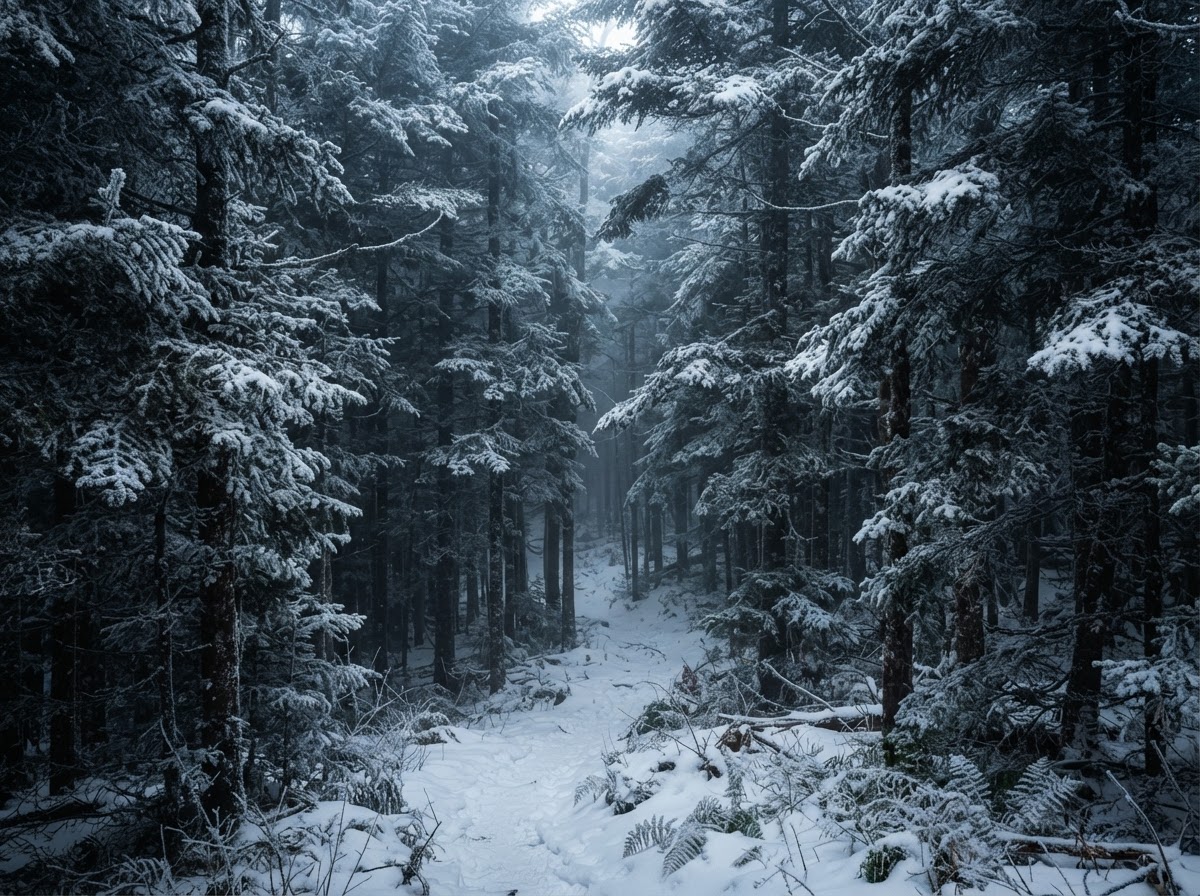
The Northeast Kingdom is the name the old Vermonters gave to the three counties in the cold northeast corner — Orleans, Essex, Caledonia. It is colder here, and the cold is the point.
The cold is the point because balsam fir, cut before the hard frost, will drop its needle before Christmas. Cut after the frost — after the nights turn sharp and the tree seals its needles against the winter — the same balsam holds its scent and its green for weeks on a door. The Kingdom's frost is later and harder than the rest of Vermont's, and that is why the wreaths are made here.
Cut after the nights turn sharp. Wired by hand. Boxed the same week it leaves the bench.
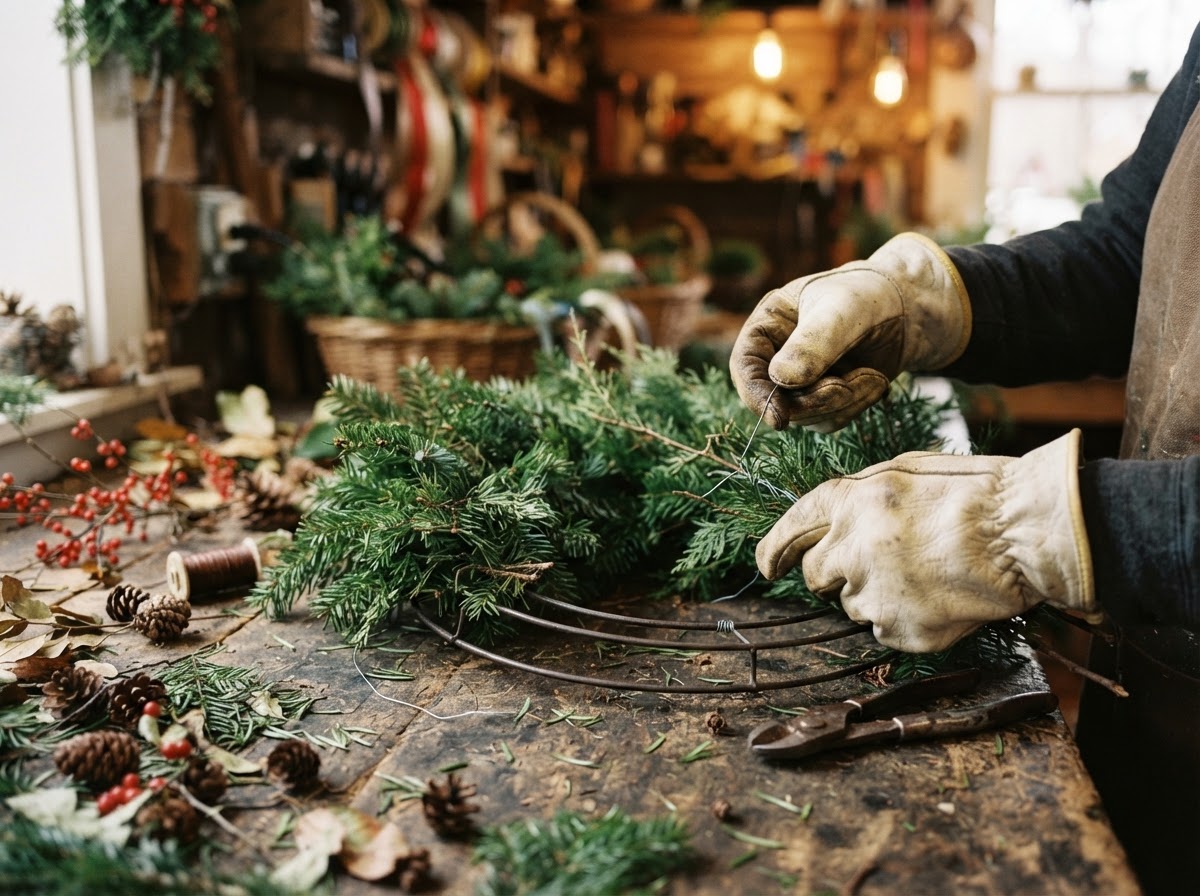
The bench is a literal bench — a long wood table in a low building where the greens are laid out, the rings are set, and the wreaths are wired one at a time. There is no machine that makes a wreath the way a hand does. A machine compresses; a hand builds full and round. A machine sets a bow; a hand ties it. The difference is visible on the door and felt in the season — a hand-wired wreath opens full and stays full.
A bench measured in decades
The bench tradition here is measured in decades, not seasons. The hands that wire the wreaths learned from hands that wired them before, and the way a wreath is built — double ring, full face, cones set by eye, bow tied last — has not changed because there is nothing to improve. The greens are better than the method; the method only has to honor them.
Why wreaths are still made by hand: because a door is not a warehouse. A wreath is the first thing a guest sees and the last thing the house hangs before the winter sets in. It deserves the attention of a hand, and the hand deserves the greens that the frost has sealed.
The greens are better than the method; the method only has to honor them.
The woodlot is the source of all of it, and the responsibility to the woodlot is the quiet rule of the house. Balsam is cut selectively, after the frost, from stands that are managed for the long life of the forest — never stripped, never cleared. A wreath is a branch of a living forest, brought to a door for a season and then returned to the air. The woodlot that gave it has to keep giving, and it will, if it is kept.
That is the house. Frost-cut balsam, a bench measured in decades, a hand on every ring, and a woodlot kept for the winters to come. The door you hang it on is the last door in a long line of doors, and the first door of the season.